
A leaking water heater is not automatically a heater at the end of its life. Plenty of leaks come from parts that are cheap and quick to replace: a relief valve that no longer seats, a plastic drain valve that has started to weep, a supply connector with a tired gasket, or a corroded fitting at the top of the tank. Some puddles are not leaks at all but condensation, especially on a newly filled tank or a gas unit starting up in muggy weather. The one leak that cannot be repaired is water seeping from the steel tank, usually through the bottom or a seam. For Taylor, MI homeowners, the difference between a small repair and a new heater is why diagnosis comes first.
A leak call with us starts with evidence, not guesses. The technician wipes the tank and fittings dry so fresh water shows where it starts, then checks the relief valve and its discharge line, the drain valve at the base, and every connection on top. On gas models we also inspect the burner compartment, because water there can be normal startup condensation or a sign of a tank that has failed. A relief valve that keeps releasing water triggers a pressure test: static pressure above roughly 80 psi, or a missing expansion tank on a closed system, will keep a new valve weeping. Findings come first; the repair follows.
Most leaks are fixed in a single visit. We replace worn relief valves, swap plastic drain valves for durable brass ones, rebuild corroded connections, add or recharge an expansion tank, and install a pressure-reducing valve when street pressure runs high. If the tank itself is leaking, there is no safe patch, and you will hear that from us directly along with your replacement options. We also help prevent the next leak from doing damage: a drain pan piped to a proper drain, a water sensor or automatic shutoff valve, and a clear label on the shutoff. For water heater leak repair in Taylor, call (734) 280-6312.
Our two most requested services are Water Heater Repair in Taylor and Water Heater Replacement in Taylor. Either is a good place to start.
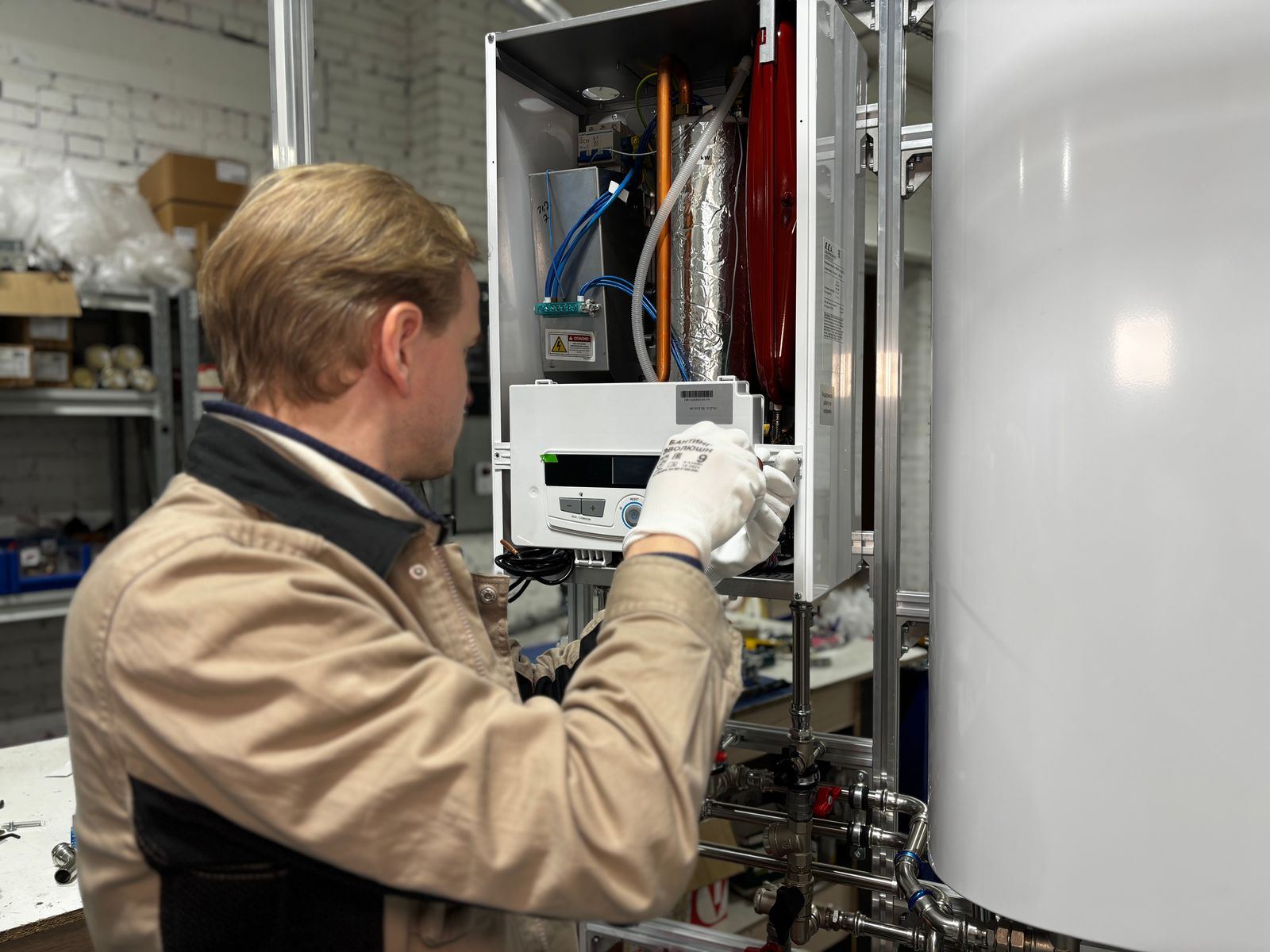
How to Tell Something Is Wrong
Most tanks announce trouble weeks or months ahead with rumbling noises, rusty water, or hot showers that keep getting shorter. If any of the following sound familiar, it's worth having the unit checked:
- Water collecting under or beside the heater
- Warped baseboards or stained drywall beside the water heater
- Water inside the burner compartment of a gas heater
- Higher water use with no obvious explanation
- Brown hot water along with moisture around the tank bottom
- Moisture or mineral crust at the end of the relief valve pipe
- Steady drips from the drain valve near the base
- Mineral buildup or rust around the hot and cold connections
Don't Wait for a Total Failure
Left alone, even minor symptoms like rumbling or temperatures that swing from hot to warm tend to mean the heater is working its way toward a breakdown. Don't wait. Get Taylor Water Heater on the phone at (734) 280-6312 and we'll get a technician scheduled.
Need Help With Water Heater Leak Repair?
One call gets a technician scheduled and a clear price before any work starts.
Call (734) 280-6312 NowFrequently Asked Questions About Water Heater Leak Repair
Why This Job Calls for a Pro
Water heater leaks are easy to misread. Water pooling at the base may start at a fitting on top and run down the jacket, and condensation on a cold tank can look exactly like a failure. Buying the wrong part is money down the drain, and overlooking a tank that is starting to go can lead to a much bigger flood later. There are safety concerns, too. The relief valve protects against dangerous temperature and pressure, and capping or plugging it to stop a drip can set up a violent failure. Corroded fittings on an older tank can crack under a wrench, and electric heaters sit on 240-volt circuits that do not mix well with wet floors.
With a trained eye, the answer usually comes quickly. We isolate each possible source in turn, confirm it with fresh water on a dried surface, and measure static pressure so a new valve does not start dripping next week. Worn relief valves, weeping drain valves, and corroded connections are swapped the same visit, and pressure problems get a permanent fix, whether that is an expansion tank or a pressure-reducing valve. A rusted-through tank gets an honest replacement recommendation rather than a patch, and we can add a piped drain pan and a leak sensor to protect your home going forward.
Our Water Heater Leak Repair Process
We follow the same careful process on every water heater, whether it's a quick thermostat swap or a full tankless conversion. Here's the short version:
Isolate the Leak
First the water gets stopped. We confirm the supply valve is closed, the heater is off, and the area is safe to work in.
Trace the Source
We dry the tank and fittings, then check the relief valve and discharge pipe, the drain valve, the top connections, and the burner area one at a time.
Check Pressure & Expansion
Leaks often have a cause behind the cause. Pressure above about 80 psi or a waterlogged expansion tank gets found and corrected.
Repair, Refill & Verify
The faulty valve or fitting is replaced, the tank is refilled and bled of air, and we watch the connections under pressure until we are sure they are dry.
Want a Professional Opinion?
Tell us the age, fuel type, and symptoms, and we'll help you sort out the next step.
Get Help: (734) 280-6312How to Prevent Water Heater Problems
Routine maintenance is almost always cheaper and easier than an early replacement. Here's where to begin:
- An expansion tank that is present and properly charged keeps the relief valve from opening every cycle
- Replace a depleted anode rod before the steel tank becomes the next target for corrosion
- Check your water pressure; if it runs above about 80 psi, a pressure-reducing valve protects the tank and valves
- Annual flushing removes sediment that traps heat against the tank floor
- Put a water leak sensor on the floor next to the tank so a drip gets noticed early
- Make a habit of checking around the heater for moisture or corrosion every few weeks
- Place the heater in a drain pan with a line to a floor drain or outdoors, especially above finished space
Comparing DIY and Professional Work
A few tasks, like checking the temperature setting or lifting the relief valve lever to test it, are fine for homeowners, but most water heater work involves gas lines, venting, 240-volt circuits, or a tank full of scalding water, and that belongs with a professional. Here's a comparison:
| Factor | Doing It Yourself | Hiring a Pro |
|---|---|---|
| Finding the Source | Fix the part nearest the puddle | Leak traced to its true starting point |
| Relief Valve | Valve capped to stop the drip, a serious hazard | Root cause fixed so the new valve stays dry |
| Corroded Connections | Tightened until the fitting cracks | Dielectric unions and connectors rebuilt |
| False Alarms | Normal sweating treated as a leak | False leaks ruled out with testing |
| Water Damage | Floors left exposed to the next leak | Protection added where it matters most |
| Result | Source unconfirmed | Confirmed dry repair or honest replacement advice |
Talk to Our Water Heater Leak Repair Team
Cold showers and damp floors don't get better on their own. Taylor Water Heater can have a technician headed your way soon.
Call (734) 280-6312 NowWhere We Provide Water Heater Leak Repair
We bring water heater leak repair to homes and businesses in town and across the nearby communities. Pick your area to see local details.